
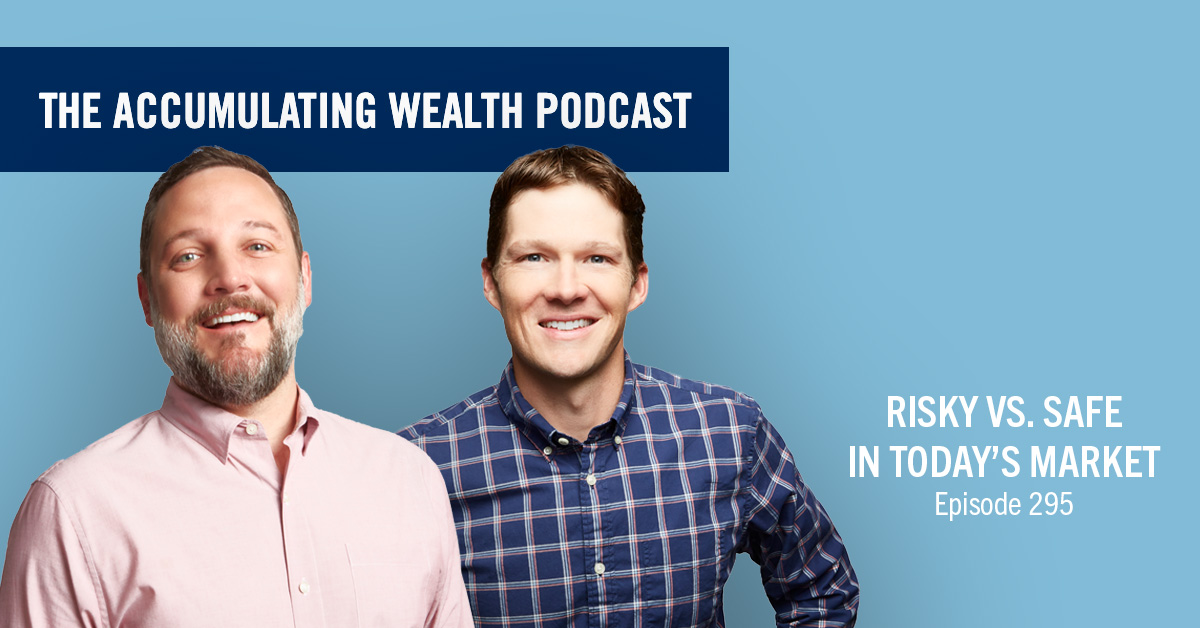
Navigating investment “risky” and “safe” choices in uncertain markets
WHAT YOU’LL LEARN
- How market uncertainty affects investor decisions
- The influence of consumer behavior on investment risks
- Importance of personal risk tolerance in financial planning
- Insights from investment managers on market segments, including consumer discretionary spending, tech hardware, real estate and utilities
- Role of diversification in risk management
Questions Answered in this Episode
What makes an investment risky?
High variability and dependence on market trends can increase risk.
How do investment managers view current market risks?
Consumer discretionary, tech hardware, and leveraged companies are viewed as riskier.
What sectors are some considering “safe” right now?
Utilities, transportation, and diversified portfolios are seen as stable.
Key TakEaways
- Risk varies across sectors and individual preferences
- High inflation impacts investment safety
- Diversification minimizes ignorance-related risks
- Market trends require adaptive strategies
Who's this episode for?
- Investors exploring market opportunities
- Financial advisors advising on risk management
- Business owners managing financial risk
- Individuals assessing personal risk tolerance
ABOUT THE HOSTS
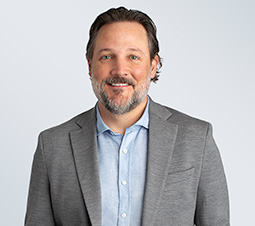
Hunter Satterfield – CPA & Partner
- Financial Advisor with Cain Watters & Associates since 2007
- Chief Investment Officer
Judson Crawford – CPA & Partner
- Financial Advisor with Cain Watters & Associates since 2004
- Public speaker, New associate mentor, Marketing Committee member
Reach Hunter and Judson here: cainwatters.com/wealthpodcast/
About the show
The Accumulating Wealth Podcast helps business owners and professionals make smarter financial decisions through insights on tax strategy, investing, and long-term wealth planning.
Additional Resources
Podcast video
Full transcript
Welcome to the Accumulating Wealth podcast. I’m Judson Crawford. And I’m Hunter Satterfield. We are CPAs, wealth advisors, and partners at CWA, a financial services firm here to help you navigate the decisions you face every day. Today, we’re talking about something every investor thinks about, especially when markets feel uncertain: what’s actually risky and what’s truly safe?
Because in investing, the biggest risk is not always where people assume it is, and what feels safe on the surface is not always the best long-term move. We’ll unpack how to think about risk in the market, where investors can get tripped up, and how to make decisions that support both confidence and long-term growth. Let’s get into it.
Okay, before we get started, Judson, of course this is in no means investment advice. Folks, what we’re going to talk about here, we’re not going to mention specific names or anything like that, but we’re going to be talking about different sectors. But this, again, is not investment advice. We don’t recommend you take this and trade on it in any way. So now that that’s done, Judson, let’s go.
Okay, so Hunter, before we talk about risk further, I’ve got a questionnaire that I’m going to gauge your level of risk, okay? Oh, boy. Oh, boy. And these are just quick yes and no answers. You’re going to answer just what comes to you first, okay? Okay. And then we’ll assess your risk, and I’ve got one last question, okay?
So if you go to a restaurant that you love and they have a special menu item that says, “Chef’s experimental special,” are you going to order it? No. Okay. You go to a theme park, because I know you’re a big theme park guy. You go onto to a smaller ride first to warm up, or are you going straight for the big boy? Straight for the big boy.
Have you ever eaten something and immediately thought, “This could be a mistake,” but you kept going? On the July 4th episode last year, yes. That was forced, though. I don’t know if that counts. If something is significantly cheaper but has bad reviews, are you still tempted to buy it? 24-year-old Hunter, yes. Current age Hunter, no.
Would you take a job that could double your income but has a real chance of failing? No. If I give you $1,000 outside of Harrah’s Casino, would you put at least 50% on the first bet? I would turn around and walk away immediately. That is not the question. No.
I know the answer to this one, but if you’re in a pickup basketball game and it’s tied in the final seconds, do you want to take the final shot? 100%. Yeah, we know I know this about you as well. Have you ever ignored an expiration date and ate it anyways? Absolutely. Really? Yes. I thought that would be a no. They’re just suggested dates, really. Okay.
Do you like trying apps or tech before anyone else has tested them? No. And last, would you start a business even if you had no guarantee it would make money? Yes.
So let’s see, okay. So Hunter, you answered five yes and five no, which means you’re a calculated risk-taker. That sounds like me. I agree. Indeed. You like upside, but you still like to sleep well at night. And what’s interesting about these is that while they’re kind of goofy, each one also really is kind of how you make financial decisions for yourself, right?
So let me ask you this. Have any of these questions triggered something that reminds you of a risk you’ve taken in your real life?
Yeah. No, absolutely. I mean, I think probably the one that comes to mind most and is probably consistent with you as well is moving over to Cain Watters, right? I mean, we had a very known career path at our previous firm. There were steps you took. You climbed the ladder. You knew exactly what was going to be there when the time came, and yet neither one of us, from our perspective, neither one of us wanted that for our lives, and we came to a small CPA firm in a tiny office with a smaller team and I mean, that was a very… that was a straight up risk.
I don’t even know that I could say it was calculated. It was just a straight up risk. I had many business mentors at the time that were like, “Hey, man, this is too risky. You’ve got two kids. I don’t think you can do this.” But ultimately, I knew that if I bet on myself, which is probably what you would say as well, it would ultimately pay off. But that’s probably the biggest risk that I ever took and just kind of crossed my fingers and said, “I hope it pays off.”
Yeah, and for me, 22 years later, I’m still not sure. You know? I think you’re doing okay. Yeah, we’re all right. No I think that’s a great point, but I think, again, going back to this, when we’re talking with our clients, when we’re dealing with our clients on a day-in, day-out basis, we’re really dealing with risk/reward in almost every decision, right?
Absolutely. I mean, if there’s not risk in a decision, and I think oftentimes people think risk means it’s going to go down, right? I mean, but if you think as a simple example of a casino, whether you put it on red or black, I mean, that’s a risk you’re taking and it could go up, right?
I mean, it just, all risk is, is this, like, variability of outcomes or this uncertainty of outcomes or this unknown of outcomes. But if you’re going to take any risk, if you refuse to do so, you’re not going to have really much reward, right? That’s right.
And I think that is not just investing. I think that’s building a business. I think that’s taking a new job. I think that’s getting married. I think that’s having children. They all come with risks, but where we are on the risk spectrum I think varies just so heavily from person to person. Absolutely.
Absolutely, and as you were just talking, I was thinking about, like, some of the day-to-day things that we may not think about risk/reward with our clients, that we may not think about risk reward but absolutely are.
I was recently having a conversation with a client about hiring, and it was like, do I go with this individual that has 20 years of experience and the cost is a lot higher, or do I go with this new person that I’m going to have to train more, the cost is lower, but the upside may be greater? They may not be stuck in their ways, right? Yeah.
That’s- And that example, it translates near perfectly to investments, right? It translates to building your business, to your point, buying a piece of equipment, opening a new location, bringing on an employee, to your point, doing a new marketing campaign, all of it.
It’s all a part of this bigger equation. And I think we just think so much it’s, “Oh, it’s just investment.” And we’re going to talk a lot today about investments, but also how that spills down into the rest of our financial plan because ultimately our job as financial advisors when we are meeting with our clients is helping them understand the risk, when the risk is right to take, when it’s probably not right to take and just guiding them, and then ultimately they make the decision. Absolutely.
And I think that when, like you said, when they ultimately make the decision, I think it’s so important for each of us to really understand our own risk tolerance, our true risk tolerance, right? I mean, I think for you and me, we’ve been doing this long enough with our clients that we pretty well know our clients’ risk tolerance, right?
So, let’s say a new investment comes up. You sort of know who you can go to with this investment, and who probably doesn’t fit their profile, right? For sure. But I think if the clients can understand that about themselves, it’s going to be easier to make some of those decisions that come up.
Yeah. Early on in my career with clients, we would give them different questionnaires and whatnot and try to gauge risk. Now, I mean, when you’ve gone to dinner with them, flown to their town and hung out with them, sat in meetings here in our office for years, you pretty much know them, and you gauge the risk on small things, like where they choose to take vacations, how they choose to provide for their children, whether they went on a rollercoaster, right? Like, I mean, all those small things I think pour out to what their risk tolerance is and where they should be in the midst of a broader spectrum.
Now, I think what happens, though, is as investors, we tend to think, ” Oh, there’s no risk if I go do this. I’m going to go do it because, everybody says invest 100% in the S&P 500.” And I think that’s just flawed. We don’t align the risk where we have in the rest of our life with our investments, and I’ve never understood that, and it’s trying to get people to, ” Hey, Dr. Smith, you don’t need to take this risk. You have already prepared adequately. Why would we go do that? Why wouldn’t we de-risk from this investment?”
That’s right. And really what it comes down to when you talk about, like, bad example, which is like I just want to do 100% S&P 500 because it’s worked recently, or because what I’m seeing online or my friends are doing or whatever it is, that really hearkens back to how we use allocation for risk, right?
Because yes, we are taking, essentially in a way, we’re taking a certain portion of your investments and putting them 100% S&P 500. Absolutely. And we’re taking a portion of your investments and we’re putting it 100% small cap, right? And that’s really what allocation is made up of.
But I think that, we talk about this, we talk about these questionnaires we’ve done with our clients, we talk about allocation and how that correlates to their investments, but we wanted to take it a step further today, right? And talk a little bit about risk as we see it more from an economic standpoint and market segments and everything, because that’s also something that we assess on an ongoing basis for our clients, right?
Absolutely. And you know what? It’s interesting when I’m out traveling and I’m talking to people and I explain what our business is. They’re like, “Oh, that’s really interesting. Like, how do you think that on the broader market and your role as CIO or managing the investments for the firm or whatever else?”
And I say, “You know what? It’s actually, I think it’s incredibly insightful because we work with 3,600 small businesses across the country. We are seeing the pains and struggles well ahead of some institutional manager or some asset manager elsewhere sitting up on Wall Street. We see it and feel it because we have emails in our inbox that people talk about, “Hey, this is something I’m dealing with.”
But this idea came up in my head because I was at this deal a few weeks ago, and one of the questions that was asked to a couple of our investment managers are, “Hey, in this current market, what do you see as risky and what do you see as safe?” And so I was like, “Oh, this is going to be great,” because we had been wanting to talk about this topic for a while.
So I sent an email out, listeners, to all of our different investment managers, and I said, “Hey, give me one risky thing right now and one safe thing.” And I didn’t ask for specific stocks. I didn’t ask for sectors necessarily. I just said, “Where do you see risk, and where do you see safety?” And I think there’s some threads that run through all of this so we want to talk about it. It’s pretty fun. Let’s do it.
All right. So first, we’ll start at large cap, and we’ll kind of move down the market. The first is one of our large cap managers, and he addressed the question as all cap equities, right? So, the whole U.S. stock market. And he said, Judson, risky to him was consumer discretionary, so pockets of the market where the consumer can be discretionary on whether or not they want to purchase things in there, right?
So think about all the discretionary decisions you make every day, listeners, the companies you buy from. That’s these types of companies. And he said, really the reason there is the consumer pressure, right, on just CPI and I think that comes through. We can talk about inflation hitting today.
But really, he has seen weakening in that sector through the early part of this year. And higher for longer oil prices, what appears to be increasing inflation, I think are going to do some damage to this space.
You want to rip through inflation today? Inflation. A big important number came out this morning. That’s right. Well, yeah, CPI came out at 3.8%, y’all, and that’s the highest in over three years. So we’re going back to that time period where we were seeing crazy numbers like seven and eight. PPI inflation is the highest in three and a half years at 6%. Energy is 18%, highest in four years. Gas, 30%, highest in basically four years as well.
And I think, again, these are the areas of the market we’ve been talking about with Brad during Story Time, where there’s probably, even if things settle down in the Middle East, there’s going to probably be more pressure. And what’s the through line to people’s actual businesses with this?
Well, I mean, to your point earlier, this inflation number is really just verification of what we’ve been hearing from clients all this year, right? And what clients are hearing from both their staff and their patients, which is gas prices are hurting, grocery prices remain really high.
I mean, you and I have talked about it. Airlines’ prices are double what they were six months ago. It just seems at every corner, prices are expensive, which makes, again, exactly what you’re talking about, for our clients, it makes that conversion of treatment harder, period.
Exactly, and I think it means that you’re going to have to work. You’re going to have to work for this, even if you don’t view it as discretionary treatment, if the patient does, this is a sector that’s weakening everywhere. It doesn’t mean that people aren’t still flying. I mean, I’m seeing the lines on the news of people checking in in Heathrow and how long the lines are. So, people are still going, it’s just they’re choosing where their dollars are going to go. That’s right.
So his answer to safe was transportation stocks and again, this goes to like asset-heavy transportation companies, right? So things that they’re not going to get disrupted by AI.
They’re not going to get disrupted near as much by things like consumer discretionary choices or whatever else it is, because you have to have certain things in order to get your life done. So I thought that was interesting. Moving down the cap stack to mid-cap, he said one of our mid-cap managers said tech hardware.
So like fiber optics, memory, things that are basically needed to create all of the AI development we had. And he said it’s really because of the high expectations driven by the huge AI spend I think this is a really great way to segue on the risk topic. He’s not saying it’s going to go down.
He’s just saying it’s risky, right? Yeah. I mean, if AI pays out, then these tech hardware stocks will do fine. He’s just saying there’s added risk because of the unknown of where AI’s going.
Well, and he may not have answered the same way a year ago, because at that time, there may… again, maybe it was a little bit more than a year ago, but there wasn’t quite as much money put into it, and they weren’t quite the same level they are today. That’s what makes it risky is kind of what he’s saying. Again, you’re right. And I think that’s an important thing to say about risk in general.
Whenever we talk about an investment being risky, it doesn’t mean it is going to go down. It probably means, though, that it has a higher variability of, hey, it could really go up or it could probably also really go down. Right. And what’s interesting is, like, this sector, we’re not allocating away from it, right? We’re just making sure that we are risked appropriately because it is a very good sector overall.
So, his safety net was utilities. And it’s just interesting, right? Because those are those, like, core things we need in our life. It’s like that- Utilities, transportation, right? Exactly. The down the fairway stuff.
And so I thought that was very interesting as well. Okay, moving down even further into the small-cap space. And he said, one of our managers in the small-cap space said anything that’s got a ton of leverage and exposure to interest rates. And I think that’s what we’ve been talking about all year, especially given these interest rate numbers, Judson.
Inflation. We ain’t seeing a cut. We’re not seeing a cut. Yeah, we’re not seeing a cut. Period. And small-cap businesses depend so much on interest rates staying low. I’m assuming that’s why he’s saying that’s a very risky space right now. Well, and I wonder, and I haven’t read anything on it but what your thoughts are is, hey, we’re not seeing a cut, but what does this look like as this inflation number goes up to this almost 4% what the chances are that we could actually see an increase?
Yeah, they’re unfortunately rising. And I think that is something that the market has not priced in. And it could be a big shock to the system. We will see, as the Fed has their next meeting post-Warsh, some of the language that gets included. If the language is starting to point toward that, we could see a little bit of instability in the market very, very quickly. 100%.
So I mean, again it’s an area where it’s like, is he moving away from that? No, it’s just an understanding of, hey, anybody that’s got a ton of leverage right now and has got susceptibility where rates are going is a riskier area. His safer area was underappreciated earnings power, right?
And we’re going to see that when we talk about our yield space too here in just a second. Like, good assets, good companies that have consistent secular growth. It’s not complicated, right? I mean, that is an area in a high-interest rate environment in a high inflation environment that can be very, very good because you have a lot of pricing power.
Yep. One thing that it made me think about when you were talking about his risky, which, he said any businesses that are really dependent on leverage, I would say, for any listeners, clients or non-clients, this is something to really look at for yourself as well.
If you’re highly levered right now or you’re having- if you’re struggling with your debt payments anything like that with these economic headwinds that we have, there’s no better time to talk to somebody about looking at that, right? Because you don’t want to head into a time where your revenues get a little bit more choppy or start to have even more headway if you’ve got a problem with debt. So, I mean, again a great time to reach out to somebody to help out with that.
Yeah, I mean, if you look at these companies that are dealing with over-levered balance sheets or whatever else it is, I mean, those are some of the decisions they have to make. I mean, you’re seeing companies that have invested a ton in AI who are laying off workers.
I mean, they’re just, they’re laying it off. And they might be saying, “Oh, it’s because we’re getting efficiencies from AI,” but the reality is they’re probably doing it to continue to keep their earnings where they need to be. Yep. And again, I think that’s a perfect through line into a personal financial plan because it’s like if you are over-levered, you have too much debt, you are going to have some very difficult decisions as we go into this next spot of, “maybe I’m not flying to London this year. Maybe it’s a smaller vacation that doesn’t include flights.”
We just had this weekend, we were planning to go to one of the coasts to see a ball game and sit on a beach just for a few days with the boys, and I just went and I looked at airline tickets and hotel prices. I was like, “That’s stupid. It’s just stupid.” It’s crazy.
So we stayed middle of the country, flew for $250 round trip, stayed for $250 in a hotel, had an amazing time, great memories with the boys, and that trip was 15% of what it would’ve cost otherwise. Yeah. And that’s the type of decision-making that has to be done in these areas.
You’re still making memories, you’re still having fun, but you have to de-risk in areas like that. Yeah, totally similar thing, I was looking at vacation, and I de-risked from the St. Regis to the Ritz. Yeah, and you just moved from the penthouse suite- Presidential suite. Yeah, yeah. I moved down to just a junior suite. Yeah, well, it’s good for you. I’m trying to keep my boys in a good headspace. I was alone, so you know.
All right, so moving to just some of our yield portfolios. I think this is so interesting because our yield manager responded back and said, “Yeah, I mean, there’s risky areas where there could be credit losses. There’s safe areas where, hey, we’ve got really good, consistent opportunities, whether it’s energy or whatever else it is.”
But what I loved is ultimately he said, “We don’t see any risk on either space to our actual dividends getting paid out.” And Judson, for clients that are investing in the income yield space, which a lot of our clients do, it doesn’t matter what the stock prices do, right?
It’s kind of the whole point. Exactly. Yeah. The income is consistent. And I think that’s the biggest thing, like him saying, “Hey, we don’t really see any of our dividends going away or decreasing, regardless of risky or safe.” I love that answer. Yep. And I think that’s the real takeaway from the yield conversation. Yep.
Okay, so Hunter, that was a good summary of what you got from our managers that are managing in the public sector. We’ve also talked a lot on this podcast this year or over the past year about the private markets.
Have you heard anything or gotten anything back on the private markets? Yeah, that’s great. So I went to- Let’s talk privates. I went to private equity, private credit, and real estate managers very quickly. Private equity was really interesting. Risky was software, obviously. I mean, that’s a common theme right now.
But it’s interesting. They said it’s also a potential opportunity, right? Because the comment that he made was AI and software are not necessarily zero sum. Meaning even if AI improves efficiencies, you’re still going to have software that bundles itself around it, and so really understanding in the private equity markets, like how to navigate that.
I love that because again, risk doesn’t always have to mean negative outcomes. It could also just be opportunity if you’re thinking in a nimble sort of tailored, nuanced approach on how to navigate those markets.
And then on the safe side great cash flowing assets. Yeah, I mean, down the fairway. That was a common theme. On the private credit side, he kind of copped out. It’s fine. I get it. He’s like, risky is non-diversified, safe is diversified. It’s fine. I actually really like the answer because what he’s saying is what we’ve said before is diversification’s protection against ignorance, the Buffett quote.
And all he’s saying is we don’t know where the future holds, so we should probably just diversify. Yep.
And then last but not least in the real estate space, and we’re going to, listeners, we’re going to go even deeper on this. We’re actually going have this real estate manager on to talk through this, and it should be a really cool episode. He said safe is anything that matches demographics, right? So where demographics go, real estate goes, just by nature.
And you start thinking about the aging population in America. You start thinking about increasing student populations in colleges. You think about the cost of housing, so affordable housing. I love that. Like, go where the demographics go.
That’s great information, Hunter. So when you think about that, all right, last question before we wrap up. Great information.
You specifically asked these managers about today, where they saw risk and where they saw safety. But can you talk a little bit about how you and the team over at Tectonic continually monitor this for our clients?
Yeah, absolutely. I mean, because thankfully we have these managers who are managing hundreds of billions, sometimes trillions of dollars and they’re doing a lot of this as well. But it’s all about just conversations, right? We have a process-oriented investment philosophy at Cain Watters that we follow tried and true. So it’s just making sure that our team that’s managing money is following that investment philosophy. And if they are, if it’s diversified, and it’s finding the places that we need to be, and it’s being indexed where we need to be, et cetera, et cetera, that ultimately will pay out in spades.
So I do a whole lot of work to get to this spot, but ultimately a lot of times we don’t do much because we know that if we stay process-oriented and system-oriented it’s the most important thing.
Good conversation. Yeah, it was awesome. And hopefully this is super helpful, listeners, on what’s going on in the broader macro, even though each and every one of you is seeing this on a day-to-day basis in your practice.
Think about, again, these threads and how they go from the macro of the economy down to your business, but then also how they go to your personal financial plan and how you gauge risk that you take not just investment portfolio, but in your personal financial plan decision-making, whether it’s spending, whether it’s debt, whether it’s what you’re saving. I think that’s the biggest conversation from risky versus safe.
And in the next episode, we’re going to test Hunter’s real risk by bringing in expired milk and have him testing it.
The best way to keep up with this is to subscribe to this podcast. That way, you never have to miss an episode, and you can go back and listen to all the others. If you’re enjoying us so far, leave us a review. If you have a question, comment, or suggestion for a future episode, drop us a line at cainwatters.com/wealth. We really do answer these. And if you want to learn more about what we do when we’re not recording these episodes, visit cainwatters.com to see how we’re helping our over 3,700 clients reach their long-term financial goals.
Timestamps
00:00 – Risky vs Safe Intro
00:48 – Quick Disclaimer
01:07 – Risk Tolerance Quiz
03:12 – Real Life Risk Story
04:15 – Defining Risk Reward
06:22 – Knowing Your Tolerance
08:50 – Managers Market Takeaways
10:03 – Large Cap Consumer Pressure
10:55 – Inflation Check In
12:55 – Mid Cap AI Hardware Risk
14:24 – Small Cap Leverage Warning
18:04 – Yield Income Perspective
19:01 – Private Markets View
20:55 – Monitoring Risk
21:54 – Conclusion
Have questions or ideas for Hunter and Judson? Reach out at cainwatters.com/wealth. Don’t miss an episode, subscribe and leave the guys a review on Apple Podcast, Spotify, or wherever you listen.