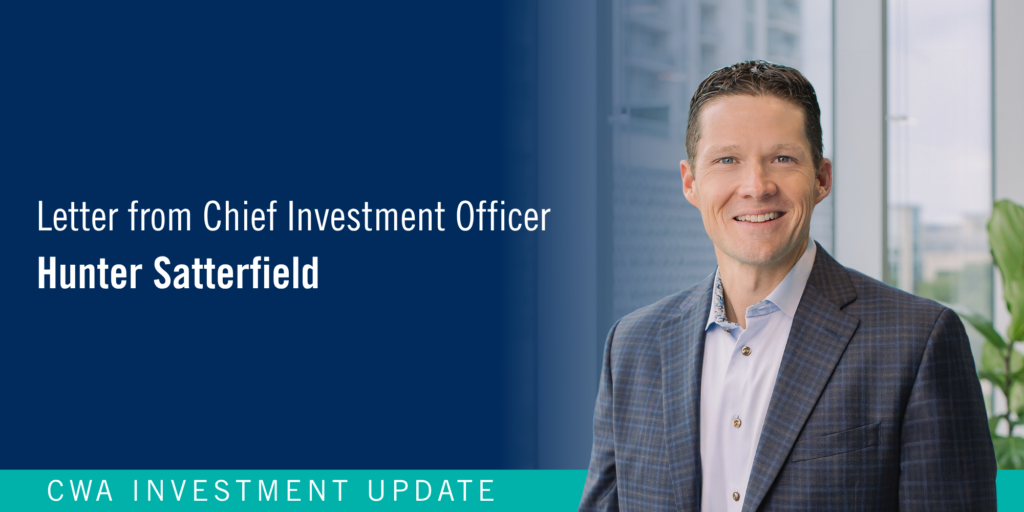


Understand how to assess and manage financial risks throughout your financial journey.
WHAT YOU’LL LEARN
- The significance of risk tolerance
- How to differentiate between risk tolerance and risk capacity
- Strategies to adjust your portfolio based on risk assessment
- The importance of continuous risk evaluation
- Managing emotional responses during market downturns
Questions Answered in this Episode
What is risk tolerance, and why is it important?
It is the degree of risk willing to be taken, crucial for aligning your investment strategy.
How does risk tolerance differ from risk capacity?
Tolerance is emotional; capacity is how much risk your financial situation can withstand.
Why is continuous risk evaluation necessary?
Goals and market conditions change, affecting your financial strategy.
Key TakEaways
- Align risk tolerance with your financial goals
- Regularly revisit and revise your risk assessment
- Emotional responses can affect financial outcomes
- Educated decisions mitigate the impact of market turmoil
Who's this episode for?
- Investors evaluating their retirement goals
- Individuals planning long-term financial strategies
- Anyone seeking to rebalance their portfolio
ABOUT THE HOSTS
Hunter Satterfield – CPA & Partner
- Financial Advisor with Cain Watters & Associates since 2007
- Chief Investment Officer
Judson Crawford – CPA & Partner
- Financial Advisor with Cain Watters & Associates since 2004
- Public speaker, New associate mentor, Marketing Committee member
Reach Hunter and Judson here: cainwatters.com/wealthpodcast/
About the show
The Accumulating Wealth Podcast helps business owners and professionals make smarter financial decisions through insights on tax strategy, investing, and long-term wealth planning.
Additional Resources
Podcast video
Full transcript
Welcome to the Accumulating Wealth podcast. I’m Hunter Satterfield. And I’m Judson Crawford. We’re CPAs, wealth advisors, and partners at Cain Watters and Associates, a financial services firm here to help you navigate the decisions you face every day. Today, we’re picking up part two of our conversation around risk. No, not the board game. Last time we talked about the risks tied to the market and individual investments.
And for this episode, we’re going to dive into risk that feels a little more personal, tolerance risk and retirement risk. Because knowing what the market might do is one thing. Knowing how you’ll react when it happens and whether your plan can hold strong is totally different. Let’s get going.
Okay, well, Hunter, we got another guest today. That’s right, a first-timer. A first-timer. Big time. Yeah. We have Nathan, the great Nathan Nelson, our Director of Wealth Management, here at the firm. Just a little quick bio, guys. He attended Oral Roberts University in Oklahoma, where he earned his undergraduate degree in accounting and MBA in finance.
Spent the first part of his career at EY, just like Judson and I, and many others here, then went to Goldman Sachs, and then most recently at Fisher Investments. Holds all the designations, CFP, CPA, CPWA. He is new to the team, and is heading up our wealth management division, which is fantastic. So welcome, Nathan.
Thanks for having me. Yeah, it’s going to be fun. We’re going to have a good old time. But just like we started with Caitlin last time, Judson, I think we have to start with Nathan, what is the biggest risk you like to take?
Well, if you look at that intro, which is generous, probably changing careers. Okay, deal. But actually, it would be calculated risks. I’m somebody who probably over thinks things too much, and I just like to know that there’s a fallback.
You know what’s funny? When I asked that question on the last recording and now, we’re all CPAs. We don’t take risks, Judson. Caitlin was the riskiest jumping out of planes. She’s jumping out of planes. I mean yeah. No doubt.
Well, folks, today if you have not listened to the last one, please go back and listen to it. It was on systematic and unsystematic risk, which are very broad categories of things that absolutely impact. And today we’re going to go through the other two that impact financial plans, and those are going to be tolerance risk or as sometimes we hear in the industry, risk tolerance, so tolerance risk and retirement risk.
So, we’re going to double-click on both of these because they’re super important to your financial plan and your investment portfolios. But I think, Judson, we still need to just give another high level on what risk is, right? Risk is just a part of getting out of bed every morning, like we talked about on our last one.
It is the price of admission if you want to be in the investment markets, if you want to have a financial plan, if you want to be a successful entrepreneur. If you want to drive to the office. Yeah, if you want to… Exactly. And so, it’s just a part of it. But I mean, Nathan, when you’re talking to your clients, how do you talk about risk?
I had a college professor, and I love the way he defined risk because he didn’t make it a bad thing. He says, “Risk is the variability of return, and you don’t get outsized returns without taking some risk.” So, I could have all my money in cash in the bank, and I’d make maybe a little bit above the current rate of inflation, but you take another risk entirely is that you’re going to run out of money because you are not going to keep up with inflation and the distributions you need to make your retirement last.
So, you have to be risked appropriately, and it can seem on the surface like, “I’m not taking risks, so I’m going to be good,” but there actually are hidden risks out there that are maybe a little bit beneath the surface relative to what we think in stock market volatility.
Yeah, which aligns with basically what we’ve said and what we said on the last podcast, which is that this financial life cycle of yours, just like the regular life cycle of yours, is truly not a decision of no risk or all risk. It’s a decision of how much risk, right? And I think that’s what we’re going to talk about today in two specific areas.
Yeah, absolutely. I mean, I think that’s by definition risk tolerance, right? And I think that’s the one that is probably the hardest. It’s very individual. We talked, Judson, last time about systematic and unsystematic, and those are just market-wide risks that doesn’t necessarily have anything to do with the person, whereas tolerance risk is super nuanced and very individual, as is retirement risk.
And so, I think we want to start at tolerance risk, and when we think about that, folks, like what that basically means if you break it down is just how much are you willing to tolerate? And it is a moving thing that is unique to an individual, right? And it is going to shift and change over time, but… and we’ll get a little bit more into that.
I mean, how do you, Nathan, how do you think about tolerance risk in a plan? Yeah, I think tolerance is what is your emotional ability to maintain discipline in your investment strategy when it’s hit the fan, right? So, when you’re talking to a new prospective client, you don’t say, “Hey, how would you feel if the market dropped 20%?”
I like to steer that conversation, “What did you do in 2008? What did you do in 2020?” Because that’s going to be a much better indicator, because I think we all have memories that change and morph over time. So really, you have to ask that question, I think, a few different ways to really feel out where people are going to come in at.
Yeah, and it’s interesting, Judson, because we use a lot of tools here to do it, right? We use computer programs that ask questions. But I mean, at the end of the day, we know our clients, right? I mean, we’ve known our clients for 15, 20 years. We know the vacations they go on, the experiences that they go on. That oftentimes, Judson, tells us more about a client than a computer questionnaire, right? 100%.
And I think that the knowledge we have of our clients also really helps us in the interim, because Nathan, as you said, the tolerance is something that while it can change over time, sometimes we let those outside things affect us in a way that can negatively affect our plan.
And so, we as advisors can kind of also serve as kind of a litmus test to the opposing tolerances of our clients. And what I mean by that is something short-term, or if you listen to our, our last episode, something that is maybe a systematic risk that’s affecting our emotions right now that really shouldn’t affect our actual financial plan.
Yeah, absolutely. I mean, I think about couple key things first, and just ask yourself these questions, and this starts to help define, like, tolerance risk in your life. How much financial loss can you withstand, right? Or I guess, Nathan, to your point, how did you do during the last one when we had losses, right?
Another one, how much volatility can you emotionally tolerate, right? So just emotion comes into it so heavily, and I talk a little bit about this with clients. I think risk tolerance comes down to kind of a couple different things. I think there’s two demographic pieces, which would be age and gender, right?
We see there are studies, which we’ve talked about at length on here, Judson, about different genders are willing to risk different things, okay? Females tend to take very different approach to risk. Just check out your insurance premiums on that, right? And then the other one, of course, is your age, which we need to talk about for sure.
And then the second piece, so that’s the demographic piece, and the second piece is sort of your personality, and I think there’s two pieces there. One is, like, how much control do you want to have, right, Nathan? How much control do you want to have over your environment? And then how goal-oriented are you and achievement-focused, right? Those are really helpful ways for people to see the spectrum of where you can sit on this. My age, my gender, how much control I want, and how much achievement I’m looking for.
Yeah. I mean, I think one other thing you could add in there is just what cohort did you grow up in? If you grew up in a Great Depression environment, you probably are going to be more fixed income focused or cash focused, right? So, I think even how you came up might kind of taint your perception of tolerance.
And then the other thing I think we have to talk through is your risk capacity being different than your risk tolerance. So, risk capacity, how much risk can you actually tolerate? If you’re going to need to spend this money in three years to put your kid through school, well, you probably can’t risk that much because you need to adjust your stock and bond mix given you have a very near-term cash need, and if you have a big market downturn, you’re not going to be able to necessarily recover to cover those costs.
So, I think those two things often get confused is what’s my emotional tolerance to handle that variability of return versus what is my actual ability to do it? So, I think it’s important to break those two things out.
Yeah. So how do you from your perspective, how do you also frame in… so like even if you have an investor that’s like, “Okay, my capacity based on my goals is this, my emotional ability is here,” but then there’s this other piece which is like, I might need to push you a little bit as your advisor because you’ve made other mistakes.
And so, you might say, “Hey, here’s where my risk tolerance is,” but how do you as the advisor work with that client to say, “But I actually might need to push you a little bit because I do need to get a little bit more return, or I do need to push you a little bit harder here”?
Yeah. I think I’m going to jump the gun a little bit and get into withdrawal rates. I think we’re going to talk about that as we get into the retirement risk section. But one of the things we looked at is in my prior life, in my last seven years working as a financial advisor, if I had a client that needed to take 5% withdrawals and they were in a 60/40 portfolio, that’s probably not going to cut it.
They’re probably going to run out of money because there’s not enough equities in the portfolio doing the heavy lifting to get them there. So, they probably need more risk just to make the numbers work, unless they were going to adjust down where they’re spending, which by the way, is the most powerful lever any of us have.
So, there’s more things than just adjusting the investment return. But I’ve had those conversations, and I’ve had to coach a client through that on multiple occasions. So, I think the biggest thing that I think influences what kind of returns you’re going to get is your asset allocation. It’s your mix of stocks, bonds, and cash.
But for a client that needs money for a down payment on a home in one year, I’m not going to tell them to put that in the market because they don’t have the risk capacity if the market were to tank. So, let’s put that in a high-yielding money market fund or something that’s going to get return. So, I think you have to know not only their age, but what is the purpose of the money, and what’s their disposition to freak out when the markets go sideways.
It’s interesting when you talk about that disposition and we’ve been working with clients long enough that we’ve seen these cycles. It’s interesting. I’ve seen clients that have come in younger and more conservative during the time period where we could easily say, “You could take more risk.” And then even as they get closer to retirement, they’re much more willing to take the risk because they’ve lived life. They have more money and more income-earning capacity.
Maybe in those earlier years, things were much tighter because they were raising kids, they had business debt, whatever it was. And so, it’s almost like life lessons and things like that have allowed them to open up like that. And so then you can kind of be on the opposite end as people get towards retirement to say, “Hey, we used to be helping you take a step forward in aggressiveness, and now we need to help you take a step back in aggressiveness.”
Yeah, it’s interesting you say that because there’s so much subtlety to what we do in working with clients, and sometimes trying to get them to take more, and then sometimes trying to get them to pull back a little bit, right?
And that piece I think that comes with it is also our knowledge of like, “Hey, what are they actually going to need? What is the market giving us?” And those types of things. But I mean, I think at the end of the day, a lot of that subtlety is knowing that client and just saying, “Hey, I know you’re fearful of the systematic and unsystematic that exist out there, but we need to get more,” or, “You are capable of getting more because you’ve got more runway,” to your point, or whatever else it is. But I think that is that fascinating piece of tolerance risk.
So, let’s say we go through this conversation with a client, we risk them appropriately, kind of on an asset allocation on where they should be or whatever else it is. Are you doing that, Nathan, before the market drops? Are you doing it during the market drop? Like, how do you frame that conversation out? Are we doing it constantly as far as risking goes?
I think it has to be constant, and a financial plan is only as good as the assumptions you put in, which for sure will be different than what reality is. Because we can project what investment returns or inflation or different factors that’ll come to bear, but the plan’s only as good as you’re revisiting it.
So, I think that’s why it’s important, especially if you’re working with an advisor, is that you go through an annual review process. You’re talking more often than less often in times of market volatility. Now, you never really want to sell in a panic, but if somebody’s panicked, maybe there’s too much risk in there for their tolerance in the first place
One thing I was going to mention as you were talking earlier is there are other factors I think even besides age. It’s like what is the goal for the money? So, you might see a 75-year-old who’s in a 60/40 portfolio, and you might see a 75-year-old who’s in a 100% stock portfolio because they don’t need that money, and it’s for their kids, and their time horizon is much longer than that of the actual client.
So, I think there has to be a multi-factor model that accounts for risk, and that’s our job, is to understand your time horizon, your goal for the money, your cash flow needs. Those drive the ultimate decision.
Yeah, I think just like you said, the key there is that somebody knows your situation. That’s really what it comes down to is understanding what that money needs to be used for.
Earlier you talked about money for the down payment on a home. Well, that’s very different than money that you know you’re not going to spend, and your kids are going to spend. Those are on two opposite ends of the spectrum. But if you don’t have definitions over that money, you’re going to get it wrong.
The other reason I think it has to be constant, to your point, is that people change. They experience different things. Their goals change. I mean, Judson, you and I, being here for almost 20 years, that first client we saw, his or her goals are very different than they are now. His or hers experience with the market, very different than right now. So, it is this constant thing.
But I mean, I think the reality, Nathan, you said before that you don’t buy the umbrella during the storm. Well, sometimes you do. If you’re at Disney and it starts raining and you didn’t anticipate it, you don’t buy it during the storm. You buy it before, right? You put it in your pocket so you can kind of protect.
And I think in times- It’s a big pocket. It is. Mary Poppins.
In times like we’re in right now, where it’s been three years of just really good, I think everybody generally is like, “Oh, risk tolerance, 100% equities, let’s roll.” And here we still are as advisors and we’re like, “Hey, like, let’s temper,” because we understand there are things like systematic and unsystematic in the market.
And so, I think we’re forcing that conversation to occur, which remains important and has to be a part of it. Not just now when you’re in your growth phase, but also as you get closer to retirement.
Yeah. One thing I’ll note, which I think is one of the best investing behavioral finance quotes of all time, is from Benjamin Graham, Warren Buffett’s mentor, and he said, “An investor’s own worst enemy is likely to be himself.”
The fact is, investing success is much less a math exercise as it is a discipline exercise, and if you can master your own psychology at the times where there is real volatility, then you’re going to have a leg up. So that’s part of the equation as well.
Well, and you, in talking about that, you talked about a study that talked specifically about how that works out for investors most of the time, right?
Yeah, it’s the Dalbar study. So, we talked about this a lot at Fisher when I was there, the Dalbar study. So, it’s a 25-year rolling study where they take the average returns of an index for both equities and fixed income, and they compare and see how does the average investor stacks up, and it’s pretty bad.
It’s something like the average investor will get 40% worse returns. So, if $1 million grew to $10 million in the S&P 500 index, average investor got, like, $6 million. And it’s even worse on equity. It’s like the average investor gets about half, and a lot of that has to do with behavioral finance. It has to do with chasing heat. It has to do with selling in a panic or rotating at the wrong times.
If you just sat on that money for 25 years, you would’ve had a pretty phenomenal return. So that’s consistent with a lot of other studies that show that the average investor’s performance typically lags the index.
Yeah, and I think if you’re thinking, listener, back to your last experience with a, a down year, a 2022 or a 2020 during COVID, if your experience was, “I have to sell, I have to sell, I have to get out, I have to go to cash,” any of those thoughts went through your heart or your brain, you weren’t properly risked. You had not properly gauged your risk tolerance or else you wouldn’t have responded like that, right?
And so, if you’re sitting here now again on these last three years and you’re like, “Oh man, things are banger. It’s been an amazing three-year run,” and you’re starting to shift in that direction again, and that next event happens, and you respond the exact same way, you’re not properly risked. And the reason we know that to be the case is that Dalbar study. Because if people are consistently underperforming market returns, what that means is they are selling on the way down, and they’re not buying until things have bounced back up.
Well, and I think you make a good point. I mean, we saw this earlier in our career, Hunter with the Great Financial Crisis in that, there were a lot of people that for a good long period outside of the blip of the dot-com bubble, markets just returned good money, right?
And so, what we saw is that there were a set of clients that were on the farther end of their retirement plan that were over-risked, they were outside of their tolerance, and it really set them up poorly for the next step, which was for retirement, which brings us to our next risk.
That’s right. And if you wrap systematic, unsystematic, and tolerance risk in a nice pretty bow, you can finish it out quite nicely with retirement risk. And retirement risk, folks, is pretty simple. It is the risk that you run out of money. That’s it, right, Nathan?
Yeah. You want to make sure that the dollars are there for as long as you need them to be. And the joke is when you ask a client about, “What’s the goal for your money? Do you want to leave a legacy? Do you want your last check to bounce?” That’s a good way to kind of flesh out, like, what is the goal for the money? Obviously, we can’t tell the future, so we have to have some kind of contingency in there, but how do you enjoy your wealth without cutting it too close?
You know what’s interesting, Judson, on this retirement risk topic is you and I now have carried a couple clients, 5, 6, 7 clients over the retirement line, and they’re retired, and they’re still with us and we help invest and- As in, like, they’re still alive … and they’re still with Cain Watters. They’re still with us. Yeah, exactly. Love all of you retirees.
But what’s fascinating is that I think Judson and, I think you would probably confirm this, one of the hardest things we do is get somebody to retire. Because for the first time ever, they truly have to trust us when we say, “You’re not going to run out of money.”
The first time ever their money is now going to start flat-lining or starting to go down over time, and they’re not going to see their pile grow, and this is probably the hardest one emotionally for a client to go through, right?
Yeah, I feel like half of our job around retirement is preparing them emotionally years in advance for the things that are going to happen in those first few years after retirement, right?
And really, it’s showing them time and time again that, “You know what? We’ve been planning on this for years, and it’s going to be okay. This is the plan. This is where you’re going to pull your money from.” And all of these things are important because it is, it’s emotional for a lot of different reasons, one of which is you’ve been saving and accumulating money for all of these years, and then all of a sudden, you stop and you realize that first purchase you make post-retirement is taking from that pile that you’ve only been adding to for years.
Yeah, and incidentally, you did it over a 30-year run during which you saw market crashes, pandemics, multiple recessions, and you know those are coming. And I think that’s one of the hardest ones here. And so, I mean, Nathan you teased this a little bit, and we need to double-click on more things within this, but you teased this a little bit.
I mean, the broad way to look at this is something like a safe withdrawal rate, right? So, we’re not just licking our finger and sticking it in the air and saying, “Yep, you can be done, Mr. Smith,” right? I mean, there is more to it behind the math. And the easiest way to think about that is something like the safe withdrawal rate. You want to talk a little bit more about that?
Yeah. So, the safe withdrawal rate is a landmark study done in the mid-1990s. Bill Bengen was the advisor that came up with this, and he basically cataloged going back to about 1926 how much could you take out of your portfolio in year one and then index that for inflation and survive any 30-year period for what was now 70 years, now that’s like 90-plus years?
So, he came up with what was a little bit over 4%. People rounded it down. Now, he has since revised that study to be something like 4.7%. So, the man who created the safe withdrawal rate has even adjusted it. Now, a few things to note. One, that’s a 60/40 blended stock and bond portfolio. So, if you had more equities in there, which over time are going to grow the portfolio more, you probably could take out more.
We did an episode with, I think, Brian Bortz about that very topic. So, where we landed in my prior firm was you could take out about 5% a year annually on 100% stock portfolio, and you’d be okay. If you consistently run above that, you’re running a high risk of running out of money, and so that’s something you can’t ignore, but you have to revisit it as well.
Yeah and, we talk, listeners, again, remember that risk it’s hard to plan for, but we have past probabilities that allow us to plan for it, and that’s the nature of this, right? Because that study showed that there’s never been a 30-year period where any portfolio rolling 30 years would run out.
And that’s the whole concept of it is like we know that retirement risk is there, we know that we can’t perfectly plan for it, but we can look back at the past, and what it tells us is that you can take around 5%, 5.5% and be okay because all other humans before you would’ve been okay as well, right?
Yeah. And it’s not to say that we’re not going to face something that we haven’t in the past, but it’s highly unlikely, and that’s why you have to just constantly reevaluate where you’re at.
Well, and I think the cool thing about that safe withdrawal rate is that he ran so many iterations of that over a period of time that it didn’t matter when the sequence of a downturn happened, and that was kind of the whole point.
Yes, there were times when you could probably take double that, and there were times when you could not take more than that at all. But that didn’t matter. Now, you want to talk a little bit about that sequence because that matters, too.
Yeah, the sequence of return risk matters tremendously because if you had a bear market the next day after you retire and then another scenario where you have one at the end, like that matters tremendously because of how the compounding works.
So, you think about it like you’re running a race, you’re in a marathon, and you hit a big hill on mile two. You’re going to be gassed for the rest of the race, and you probably will have a slower time, versus if you hit a big hill at the end of the race, you’re probably going to have a better outcome. So that matters a lot, which is why, again, the plan is only as good as how often we revisit it, because you can actually adjust your withdrawal rates based off the market environment.
If you decided, “Hey, I’m going to give myself a pay cut when we’re in a down market,” that is going to bolster your ability to spend more later. So, if you have a dynamic withdrawal rate than just the standard 4%, 5% each year, that actually is going to open more doors for you later. Because life doesn’t happen straight line. You’ll buy a car, you pay for a kid’s wedding, there’s going to be lumpier distributions that you have over a 30-year retirement.
Well, and combine two of the things we’ve talked about, okay? The sequence with investor decisions that ended up being poor, and if you looked back, again, I’m going to go back to that great financial crisis, 2008, 2009 timeframe. The number of investors that had that sequence of events as they were getting towards retirement and then made emotional decisions during the same period that affected their long-term performance, unbelievable. Missed out on bounce backs. I mean, it was really terrible.
Yeah, I mean, tolerance risk, you have to have this dialed in during retirement, right? I mean, that’s the hardest thing because you can’t afford to make a poor emotional decision because you don’t have the ability to add back to your accounts, right? And so, it almost, like retirement risk now it supersedes tolerance risk, and you are almost looking at your advisor, you’re looking at us saying, “How much can I tolerate to be able to have this safe withdrawal rate?”
I mean, that’s actually how it flips, right? Because you do need to dial your equity exposure back, but you need to keep some of it in there in order to continue to boost those returns along the way, right, Nathan?
Yeah. I think this is one of the marquee reasons why you have an advisor who has seen market volatility, because I’m going to pick on all of us DIYers out there. I’m a DIYer myself. But when you look at that Dalbar study and the fact that most investors can’t get it right by themselves, it is terrifying to me that you can unwind 40 or 50 years of work and savings in one financial crisis if you sell at the wrong time, and that’s an irrevocable decision that could alter the rest of your retirement years. It’s really a major problem for more people than who would likely admit it.
But I think that’s why, I mean, as you guys were just talking, Hunter, it’s one of the reasons why I think that we on this podcast talk about these things all the time, and it’s one of the reasons why if you look at our blogs, we talk about these things all the time, and it’s because it’s so important for our clients and our listeners that when these events come up in the market, that they remember back to these lessons that we try to talk about so that you’re not the one making that emotional decision.
And I think we’ve seen this with our clients. After messaging for 20 years, I think we’ve seen the result of when a market event happens, I don’t get the same number of calls that I got 15 years ago.
I totally agree, and, like, the reality is that they’ve built trust enough in us. It’s like the reason we get so wrapped up emotionally in this, listeners, is we will take you from zero to five million or zero to 10 million and we work so hard as a group, right?
Just you as a client and us as an advisor to get you there, that once we’re there, it’s like we have got to do this well on the backside because there’s no way to add money back into it, and that’s why I think our clients ultimately trust us on the other side of the mountain as they’re going down because they’re like, “Well, you got me here, and I know you won’t screw it up along the way.”
But I mean, it is interesting how these two sort of flow together because as I mentioned earlier, it’s like the tolerance risk almost flips on the other side of retirement and your goals have to change and whatnot.
And listeners, if you’re interested, like, you should deep dive the safe withdrawal rate a little bit more, and if you want to go back now, especially if you already listened to it, if you want to go back, it was episode 257 in October of last year where we really dove deeper with our partner Brian Bortz on this because it’s vital and it’s the easiest way for us to validate, “Hey, like, we know your retirement is going to work because of this.”
Yeah, and I will tell you the main job, in my view of a financial advisor, is to set good expectations for clients. So, here’s me setting a good expectation. We are going to have a downturn at some point. The average bear market drawdown is about 34%. Last time we saw that was in COVID. We got that in about a month.
Now, we also had a very rapid recovery, but the 2008 global financial crisis was a 57% drawdown. The tech bust was 50% over three successive bear market years in a row. Those are pretty bruising times. So, the time to talk about the next bear market is not when you’re in the bear market. It’s right now. And when you are retired, the feeling and the terror in your mind are going to be a lot different than when you’re working because you don’t have those years to make it up. So, volatility is important as part of risk, but we have to know it’s coming and make sure that we’re in an appropriate position to be able to weather it.
Yeah, and hopefully listeners, these conversations we’ve had over the past two episodes maybe inform you a little bit about why we’re not always just, “Hey, let’s throw everything at the S&P and roll.”
We’ve seen a lot the four of us, the three of us on this recording, plus Caitlin on the last, we’ve seen a lot, and we know when those times are trying and that those trying times are coming, people respond differently and react differently. And that’s why it’s so important and why we spend so much time not just talking about it but educating ourselves and educating you to ensure that we do make the right decisions and buy the umbrella before the storm so that we can have it flipped up when the storm comes.
Put it in your pocket. Mary Poppins.
Well, the best way to keep up with this is to subscribe to this podcast. That way, you never have to miss an episode, and you can go back and listen to all the others. If you’re enjoying it so far, leave us a review. Have a question, comment, or suggestion for a future episode? Drop us a line at cainwatters.com/wealth. We really do answer these. And if you want to learn more about what we do when we’re not recording these episodes, visit cainwatters.com to see how we’re helping almost 4,000 clients reach their long-term financial goals.
Judson, if you had a Mary Poppins bag, what would you put in it that could always come with you? Gummy bears. But you could put that in a regular bag, like a man purse. Yeah, it’s true. Like, like seriously, what would you put in there? Grizz. That’s my Labradoodle.
Timestamps
00:00 – Risk Series Part Two Kickoff
01:59 – What Risk Really Means
04:11 – Defining Risk Tolerance
07:24 – Capacity Versus Tolerance
11:43 – Ongoing Plan Checkups
14:25 – Behavioral Traps: Dalbar Study
17:18 – Retirement Risk Basics
19:44 – Safe Withdrawal Rate Explained
22:10 – Sequence Of Returns Risk
24:30 – Why Advisors Matter in Retirement
26:52 – Expecting the Next Bear Market
28:20 – Wrap Up and Outro
Have questions or ideas for Hunter and Judson? Reach out at cainwatters.com/wealth. Don’t miss an episode, subscribe and leave the guys a review on Apple Podcast, Spotify, or wherever you listen.